 BracksterNews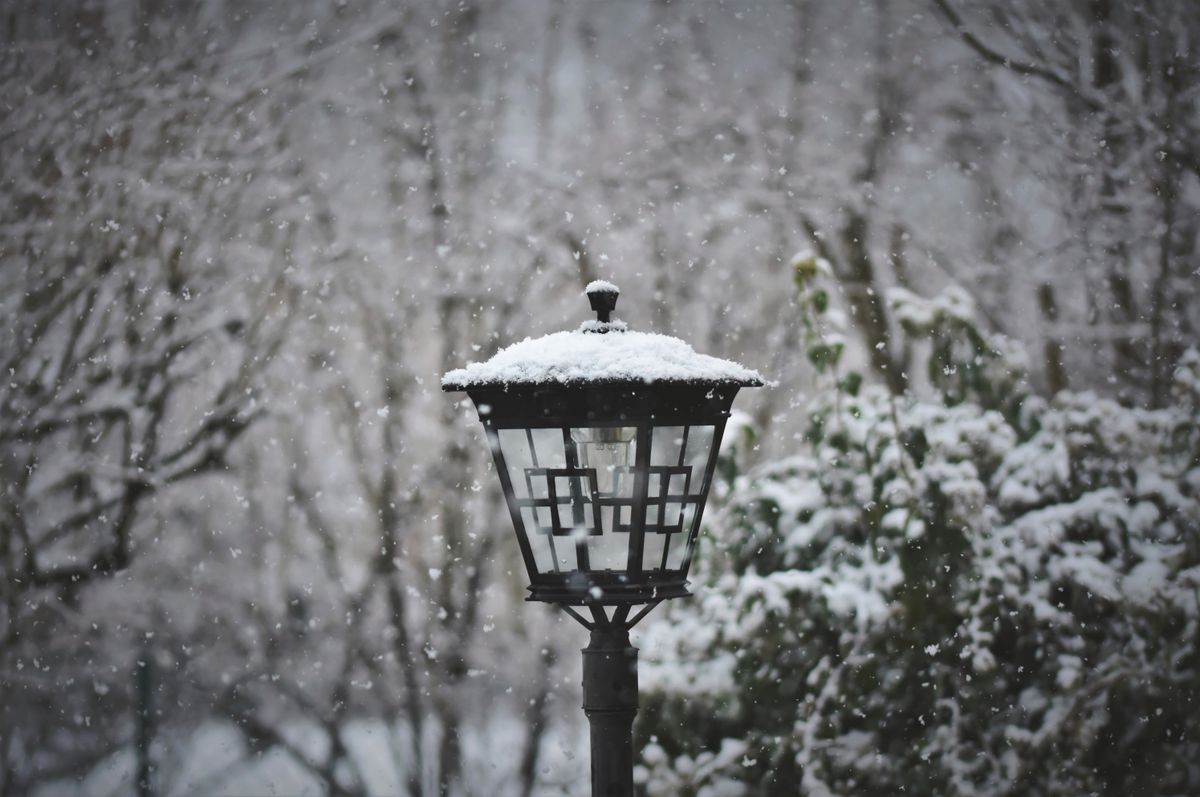
C. S. Lewis never set out to explain the lamp-post. The way the story usually gets told, he finished The Lion, the Witch and the Wardrobe, a friend asked what a street lamp was doing in the middle of a snowy wood, and Lewis spent more than five years working out the answer. That answer became The Magician's Nephew, the book about how Narnia began, and nobody had ever put it on screen. Greta Gerwig is about to change that.
This week we finally got a proper look at how she plans to do it. Netflix started things off on Wednesday with a new logo and a behind-the-scenes photo, and on Thursday Empire followed with the first images, a cover story and a long interview in which Gerwig explained what she hears when she thinks about Narnia. The short version: it's louder than you'd expect, and stranger, and I mean both of those as compliments.
In Brief
- Empire's first images from Narnia: The Magician's Nephew confirm Meryl Streep as the voice of Aslan and show newcomers David McKenna and Beatrice Campbell as Digory and Polly, Emma Mackey as Jadis and Daniel Craig as Uncle Andrew.
- Gerwig says she wanted a rock opera, not a musical, so she moved the story from London in 1900 to Britain in the 1950s and tied Narnia's creation-by-song to Bowie, McCartney, Gilmour, Townshend, Page and Plant.
- The film gets IMAX previews on Feb. 10, 2027, a worldwide theatrical release on Feb. 12, and a Netflix debut on April 2. That plan grew out of a six-week production delay, and the film's cinematographer has put the budget at $280 million.
What Netflix and Empire actually showed us
Wednesday's drop was small and a little charming. Netflix posted an animated logo for the film along with a photo of Gerwig in a heavy tweed coat, standing next to an ARRI film camera with vintage cars parked behind her. Those were the first official marketing assets the movie has had, so even a coat and a camera counted as news.
Thursday was the real reveal. David McKenna and Beatrice Campbell, both newcomers, play Digory and Polly, the two kids who stumble into the Wood between the Worlds. Emma Mackey, who was in Gerwig's Barbie, plays Jadis, the queen who eventually becomes the White Witch, and Daniel Craig is Uncle Andrew, the magician who sets the whole mess in motion. Carey Mulligan, Ciarán Hinds, Kobna Holdbrook-Smith, Denise Gough and Susan Wokoma round out the cast Netflix has announced. Empire's subscriber cover is concept art by Jaime Jones, and it shows Aslan in the middle of singing Narnia into being.
Aslan is where the biggest visual rethink lives. Streep's casting had been rumored for more than a year; now it's official, and she's the voice. The lion himself has mismatched eyes and a bold red marking, a look that coverage of the images describes as a deliberate nod to David Bowie. Whatever you think of that on paper, it's a long way from the tawny, storybook lion of the Walden Media movies.
Why 1950s London, and why a rock opera
Gerwig has been careful to say this isn't a musical. Nobody is going to burst into song over the breakfast table. What she's after is more of a feeling. She told Empire she wanted a rock opera, something big and transporting, and she keeps circling back to the idea that Narnia is "a world made out of music." Which, to be fair, is exactly what Lewis wrote: Aslan sings the place into existence.
That instinct explains the film's boldest change. Lewis set the story in London in the summer of 1900. Gerwig's version takes place in Britain in the 1950s, in the years after the war. Her reasoning is the part I can't stop thinking about. She sees a straight line from kids who grew up around bomb sites, who took rubble and built castles out of it, to the generation that went on to remake British music. She named Bowie, McCartney, David Gilmour, Pete Townshend, Jimmy Page and Robert Plant as musicians who, in her words, saved her life, and she wondered aloud how a boy named David Jones becomes David Bowie without a detour through Narnia.
Not everybody will love that line; at least one early write-up called it a bit precious, and I get it. But the sound of the film is in serious hands. Mark Ronson and Andrew Wyatt, who worked with Gerwig on Barbie, are scoring it, George Drakoulias is music supervisor, Seamus McGarvey is behind the camera and Jacqueline Durran is doing the costumes. That is not a crew you hire to make a safe, gold-tinted fantasy.
The voice behind the lion
Of everything in the Empire interview, Gerwig's explanation of why she wanted Streep might be the most disarming part. She was looking for a voice with real depth and gravity that never tips into self-importance, someone who can carry sorrow and delight in the same breath. She wanted an actor past 70, so the wisdom sounds earned, but one who still has a child's ability to be amazed. And then the dry punchline: the list of actors who fit that description, she said, is not a long one. Streep is 77.
It's a smart way to think about Aslan, who is hard to get right on screen. He has to be a creator, a king and a kind of conscience without turning into a sermon or a mascot, and in this film he's mostly going to reach us through a voice rather than a face. Gerwig also said she has loved this book since she was a kid, and in the statement Netflix released she talked about falling for the idea of a cosmic lion singing a world into being. That's an odd thing to be moved by as a child. It's also not a bad seed for a movie.
Seven weeks in theaters, and a very big price tag
The calendar is simple enough. IMAX previews begin Wednesday, Feb. 10, 2027. The wide release is Friday, Feb. 12. The film reaches Netflix on Friday, April 2, which works out to about seven weeks in theaters first. Netflix handles distribution in the U.S. and Canada, and Sony Pictures handles the rest of the world.
That is a big change from the original plan, which was a two-week, IMAX-only run over Thanksgiving 2026 and a streaming debut around Christmas. Deadline reported in May, citing its sources, that a cast member had been injured, which cost the production six weeks and meant the film wasn't going to make its Thanksgiving slot. The wide theatrical plan, the trade said, was always Plan B, and a wide release was something Gerwig had wanted all along. Filming ran from August 2025 into January 2026 in England, and coverage at the time called the new rollout the biggest theatrical launch Netflix has attempted.
Then there's the money. Cinematographer Seamus McGarvey said on the We Need to Talk About Oscars podcast that Narnia is a $280 million Netflix project. Some earlier reports and listings had it nearer $200 million, and I haven't seen Netflix put a number on it publicly, so treat the figure with some care. For scale, Barbie reportedly cost around $145 million and went on to gross more than $1.4 billion worldwide. Gerwig signed on in 2023 to write and direct two Narnia films, so this is the first chapter of something bigger, and the 2005 Lion, the Witch and the Wardrobe is still the franchise's high-water mark at the box office.
